Raspberry Pi 5 vs. Orange Pi 5: Which SBC Wins for Home Server Builds?
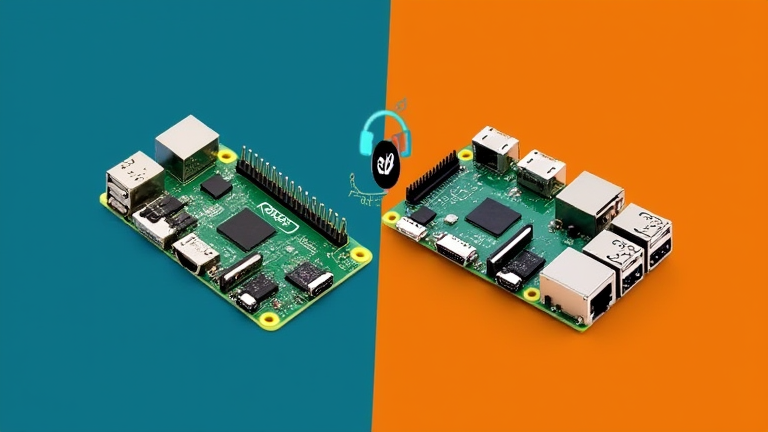
TL;DR: The Raspberry Pi 5 is the superior choice for general-purpose home server builds due to its superior thermal management, vast software ecosystem, and reliable long-term availability. The Orange Pi 5 offers higher raw compute performance and more built-in hardware features, making it ideal for users willing to troubleshoot driver issues for specific, power-intensive workloads.
The Battle of Single-Board Computers
The single-board computer (SBC) market has evolved significantly, with the Raspberry Pi and Orange Pi emerging as two of the most prominent contenders for home server applications. Both manufacturers release updated hardware frequently, but their design philosophies diverge sharply. The Raspberry Pi Foundation prioritizes stability, community support, and a seamless out-of-the-box experience. Conversely, Orange Pi, backed by Allwinner and other Chinese semiconductor partners, focuses on aggressive feature sets and raw performance metrics, often at the cost of immediate software compatibility. For the average home server builder, the decision between these two platforms hinges on whether you value convenience and longevity or raw power and feature density.
If you want to dig deeper, check out our guide on How to Master SEO: Step-by-Step Beginner Tutorial.
Hardware Specifications and Performance
At the core of the Raspberry Pi 5 is the Broadcom BCM2712 processor, featuring four Cortex-A76 cores running at up to 2.4 GHz. This represents a significant leap from the Pi 4, offering roughly three times the CPU performance and double the GPU capability. Crucially for server builds, the Pi 5 includes dedicated voltage regulators for its USB 3.0 ports, allowing them to deliver full 1.5A power without drawing from the main SoC power rail. This is vital for powering external NVMe SSDs or multiple USB hard drives, which are common in home server setups. The board also supports dual 4K displays via the VideoCore 7 GPU and includes PCIe 2.0 interface for high-speed storage expansion.
The Orange Pi 5, on the other hand, typically features the Rockchip RK3588S or RK3588 SoC. These chips offer four Cortex-A76 cores and four Cortex-A55 cores, along with a dedicated NPU (Neural Processing Unit) with up to 6 TOPS of AI performance. In raw CPU benchmarks, the Orange Pi 5 often outperforms the Raspberry Pi 5, particularly in multi-threaded tasks. It also comes with more onboard RAM options, ranging from 4GB to 32GB, compared to the Pi 5’s 4GB and 8GB options. Additionally, the Orange Pi 5 usually includes more USB ports and native Ethernet speeds of 2.5 Gbps, whereas the Pi 5 requires a separate HAT or USB-to-Ethernet adapter for 2.5 Gbps connectivity.
Software Ecosystem and Industry Impact
The primary differentiator remains the software ecosystem. Raspberry Pi OS is a hardened, optimized Linux distribution that receives regular security patches and updates directly from the Foundation. The community support is immense, with countless tutorials, pre-configured images for Docker, Home Assistant, and Proxmox, and dedicated forums. This stability is critical for home servers that must run 24/7 with minimal maintenance. Orange Pi, while improving its OS offerings, still relies heavily on mainline Linux kernels. Users often face challenges with driver support for specific hardware components, such as WiFi modules or power management. While the performance gains of the Orange Pi are compelling, the time spent debugging kernel issues can outweigh the benefits for non-expert users.
From an industry perspective, the Raspberry Pi 5 has solidified the SBC as a legitimate edge computing device, pushing the boundaries of what home users can achieve in AI inference and media transcoding. The Orange Pi 5 highlights the competitive pressure in the market, forcing Raspberry Pi to justify its premium pricing and feature set. For home server builds, the Pi 5’s reliability and ease of integration with existing home automation stacks make it the safer bet. However, for developers building specialized AI inference servers or those requiring maximum raw processing power without the constraint of a polished OS, the Orange Pi 5 presents a compelling alternative. The choice ultimately depends on your tolerance for technical troubleshooting versus your need for a plug-and-play