Humanoid vs. Industrial Robots: Who Will Dominate Factories?
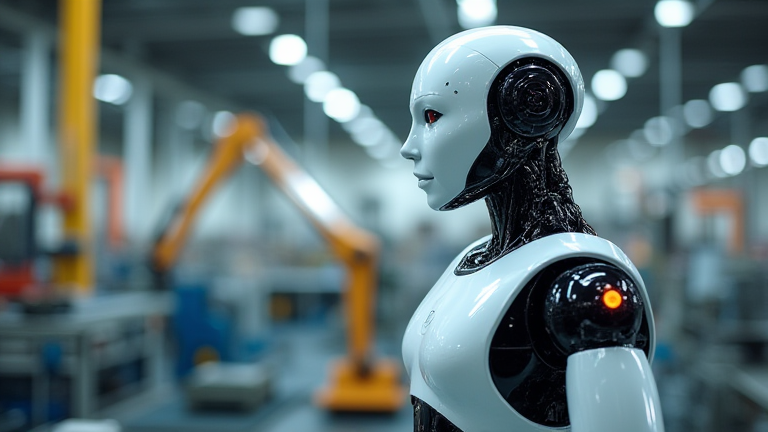
Humanoid vs. Industrial Robots: Who Will Dominate Factories?
TL;DR: Humanoid robots will dominate unstructured, dynamic environments requiring dexterity, while industrial arms remain superior for high-speed, repetitive precision tasks. The future factory will likely be a hybrid ecosystem where both coexist based on specific workflow needs.
The manufacturing sector stands at a pivotal crossroads, debating whether the rise of bipedal, general-purpose humanoids signals the end of the traditional robotic arm era. Both technologies offer distinct advantages, and understanding their core differences is crucial for strategic planning in modern automation.
If you want to dig deeper, check out our guide on Dried Herbs vs Brew: Which Offers More Health Benefits?.
Feature Highlights
Industrial robots, such as articulated arms and SCARA systems, excel in fixed-footprint applications. They offer millimeter-level precision, extreme speed, and cost-effective scalability for mass production lines. Their rigid structures make them ideal for welding, assembly, and packaging where the environment is controlled and predictable. Conversely, humanoid robots bring a unique set of capabilities to the table. They feature advanced AI integration, enabling them to navigate complex, cluttered spaces without extensive reprogramming. With two hands and a mobile base, they can perform multi-step tasks that require lifting, carrying, and manipulating objects in varied orientations. This flexibility allows them to operate in spaces originally designed for human workers, reducing the need for costly facility modifications.
Detailed Comparison
When comparing the two, reliability and throughput are clear winners for industrial robots. A standard six-axis arm can perform ten thousand cycles per day with near-zero variance. Humanoids, currently in earlier stages of commercial maturity, struggle with endurance and consistent precision over long shifts. However, humanoids win in versatility. They can switch from palletizing to quality inspection with minimal setup time. Industrial robots require specific end-effectors and re-teaching for new tasks. The energy efficiency of fixed industrial robots is also superior, as they do not need to expend power on balance and locomotion. On the other hand, the labor cost savings from deploying humanoids in non-repetitive roles can outweigh their higher initial investment for many mid-sized manufacturers. The choice depends on whether the priority is raw speed or operational flexibility.
Call to Action
Do not wait for a single technology to solve all your automation challenges. Conduct a comprehensive audit of your production line to identify tasks that are repetitive versus those that require adaptive dexterity. Pilot both technologies in small batches to measure ROI and operational impact. Start integrating now to stay ahead of the curve in the next decade of smart manufacturing.
FAQ
Q: Are humanoid robots safer than industrial arms?
A: Humanoids often have better force-sensing and collision detection due to their proximity to humans, but industrial arms are safer when properly caged due to their predictable motion paths.
Q: What is the average ROI timeline for humanoid deployment?
A: Currently, the ROI timeline for humanoids is longer, often exceeding five years, compared to two to three years for industrial robots, due to higher upfront costs and lower throughput.
Q: Can humanoids replace all industrial robots?
A: No, humanoids are unlikely to replace high-speed industrial robots in specialized, repetitive tasks where precision and speed are the primary metrics for success.