Boost Freshness: How Vertical Farming Cuts Urban Food Miles
TL;DR: Vertical farming drastically reduces urban food miles by growing produce directly within city centers, eliminating the need for long-distance transportation. This localized approach ensures significantly fresher crops while simultaneously lowering carbon emissions associated with traditional supply chains.
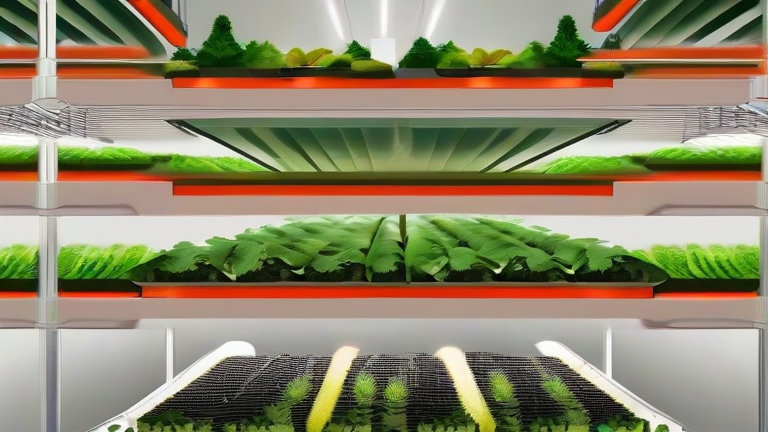
The global food system is undergoing a radical transformation driven by the urgent need for sustainability and resilience. As urban populations swell, the traditional model of shipping produce thousands of miles from rural farms to city tables is becoming increasingly untenable. Enter vertical farming, an innovative agricultural technique that stacks crops in controlled environments, typically in repurposed urban warehouses or high-rise buildings. This method not only maximizes yield per square foot but also slashes the distance food travels from farm to fork, addressing the critical issue of “food miles.”
The Market Surge
Recent market data highlights the explosive growth of this sector. The global vertical farming market was valued at approximately USD 5.5 billion in 2023 and is projected to reach USD 23.7 billion by 2030, growing at a compound annual growth rate (CAGR) of 24.4%. This rapid expansion is fueled by consumer demand for locally sourced, pesticide-free produce and the increasing pressure on supply chains to become more eco-friendly. Major retail chains are already integrating vertically farmed greens into their inventory, signaling a shift in consumer habits and retail strategies.
Expert Insights on Sustainability
Dr. Elena Rossi, a leading agricultural economist, notes, “Vertical farming represents a paradigm shift in how we perceive food security. By reducing transportation distances by up to 90%, we are not just saving money on logistics; we are saving the planet.” Experts emphasize that the reduction in food miles leads to a significant decrease in greenhouse gas emissions. Traditional lettuce can travel over 1,500 miles from farm to shelf, losing nutritional value and requiring excessive packaging. In contrast, vertically farmed lettuce travels mere feet, retaining its crispness and nutrient density.
Future Predictions
Looking ahead, the integration of artificial intelligence and robotics will further optimize these systems. Predictive algorithms will manage light, water, and nutrients with precision, ensuring minimal waste. Furthermore, as energy costs for LED lighting decrease, vertical farming will become viable for a broader range of crops, including fruits and small grains. This evolution will create a more decentralized food network, making cities less dependent on external suppliers and more resilient to global disruptions. The future of agriculture is not just about growing more food; it is about growing it smarter, closer, and cleaner.
FAQ
Q: How much water does vertical farming use compared to traditional agriculture?
A: Vertical farming uses up to 95% less water than traditional farming because it recirculates water in a closed-loop system.
If you want to dig deeper, check out our guide on 10 Proven Business Growth Strategies for 2024.
Q: Is vertically farmed food genetically modified?
A: No, vertical farming does not require genetic modification. Crops are grown using natural seeds in controlled environments without pesticides.
Q: Will vertical farming replace traditional farms entirely?
A: Unlikely. Vertical farming is best suited for leafy greens and herbs, while traditional farms will continue to produce staple crops like grains and root vegetables.