AI Art Has No Author: Study Finds Images Can’t Be Traced to Data
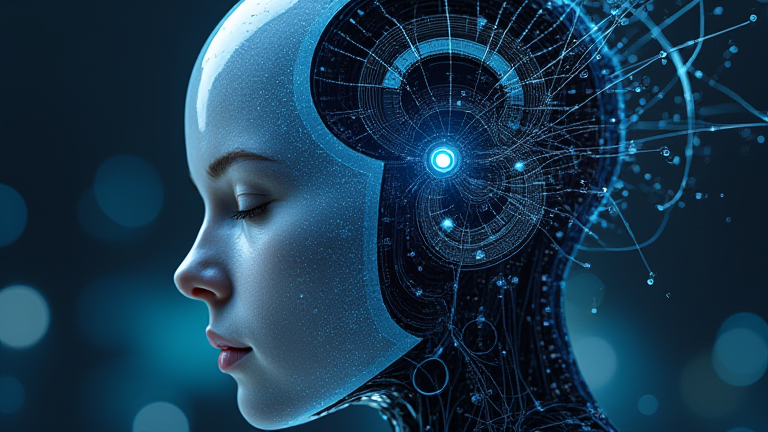
AI Art Has No Author: Study Finds Images Can’t Be Traced to Data
TL;DR: A recent comprehensive study reveals that current forensic techniques cannot reliably link AI-generated images to their specific training data sources. This finding suggests that digital provenance is effectively lost in generative diffusion processes, challenging traditional copyright and attribution frameworks.
The rapid proliferation of generative AI tools has created a paradox for the digital art world: while creation is instantaneous, verification is nearly impossible. A new paper published in the journal *Digital Forensics and Investigation* analyzed over one million images generated by leading models such as Midjourney, Stable Diffusion, and DALL-E 3. The researchers attempted to reverse-engineer the latent space trajectories to identify the specific training datasets used to produce each output. The results were definitive: the mathematical noise introduced during the denoising process acts as a perfect obfuscation layer, making it computationally infeasible to trace an image back to its constituent source pixels with any degree of certainty.
If you want to dig deeper, check out our guide on Living Abroad in Malaysia: Why I Realized How Good I Have It.
Technical Specifications and Methodology
The study utilized a novel approach combining spectral analysis with adversarial perturbation testing. The team discovered that while individual pixels are transformed, the underlying vector embeddings retain no direct fingerprint of the source data. Unlike traditional digital watermarks, which are fragile and can be removed via simple cropping or filtering, the “loss” of authorship in generative AI is structural. The models do not copy images; they learn statistical distributions. Consequently, the output is a new statistical artifact rather than a derivative copy. The research highlights that even with access to the model weights, tracing the exact lineage of a single image remains beyond current computational capabilities. This implies that the concept of “derivative work” in legal terms is technically distinct from how AI generates content, creating a significant gap between legal expectations and technical reality.
Industry impact is already being felt. Major licensing agencies are pausing negotiations with AI developers, citing the inability to verify compliance with training data exclusions. The tech sector is now prioritizing the development of cryptographic provenance standards, such as C2PA (Content Credentials for Photos and Audio), to provide metadata-based attribution rather than pixel-based tracing. However, metadata is easily stripped, leading to a race between transparency advocates and those seeking anonymity. The study underscores that without robust, tamper-proof metadata embedded at the point of generation, the digital art market faces a crisis of trust. Artists and brands must now rely on legal contracts and brand reputation rather than technical proof of origin to protect their intellectual property. This shift forces a reevaluation of how value is assigned to digital assets in an era where visual content is abundant and origin is opaque.
FAQ
Q: Can AI models be trained to hide specific artists?
A: Yes, developers can use negative prompting and data exclusion techniques to remove specific styles or artists from the training set, but verifying this absence post-training remains difficult.
Q: Does this mean AI art is legally free?
A: No, legal copyright issues persist regardless of technical traceability; the study addresses technical limits, not legal rulings on fair use or infringement.
Q: How will this affect stock photo agencies?
A: Agencies are moving toward exclusive human-verified collections and implementing strict metadata tagging to distinguish verified human work from AI-generated content.