5 Strongest Candidates for an AI Microchip Moment
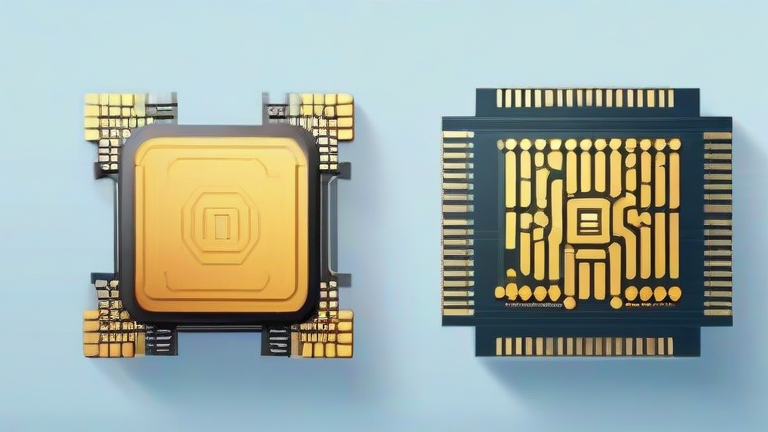
TL;DR: The five strongest candidates for an AI microchip moment are NVIDIA, Intel, AMD, Google, and Meta, each driving distinct architectural innovations to dominate the accelerating demand for specialized artificial intelligence processing.
The Accelerating Race for Silicon Supremacy
The global tech landscape is undergoing a seismic shift as the demand for generative AI capabilities outpaces traditional computing growth. This surge has triggered a fierce competition among major semiconductor and technology giants to design specialized hardware that can handle massive parallel workloads efficiently. We are witnessing what industry analysts call the “AI Microchip Moment,” a period where hardware innovation directly dictates software potential. NVIDIA currently leads this charge with its H100 and upcoming Blackwell architectures, which offer unprecedented memory bandwidth and tensor core performance, setting the industry standard for large language model training.
If you want to dig deeper, check out our guide on Vintage Vornado Fan Found Working at Vermont Town Hall.
However, the competition is intensifying rapidly. Intel is making a significant comeback with its Gaudi 2 accelerator, designed specifically to compete in the inference market while leveraging its foundry services to scale production. AMD is not far behind, with its MI300 series offering a compelling alternative to NVIDIA’s dominance by providing high-capacity memory options that appeal to data centers managing massive datasets. These two players are crucial because they introduce diversity into the supply chain, reducing reliance on a single vendor.
Simultaneously, the hyperscalers are disrupting the traditional chip sales model. Google’s Tensor Processing Units (TPUs) have been the hidden engine behind its search and AI services, continuously evolving to support complex neural networks with superior energy efficiency compared to general-purpose GPUs. Similarly, Meta is developing its own custom silicon, the MTIA (Meta Training and Inference Accelerator), to optimize its vast social media infrastructure and open-source AI models. This vertical integration allows these companies to tailor hardware specifically for their unique software ecosystems, potentially offering lower latency and higher throughput for internal applications.
The industry impact of this race is profound. It drives down the cost per inference, making AI accessible to smaller enterprises and developers. Furthermore, it spurs innovation in new architectures, such as neuromorphic computing and optical processing, which could eventually replace traditional silicon limits. As these five entities refine their specifications and expand their reach, they are not just selling chips; they are defining the infrastructure of the next decade of digital innovation. The winner will not necessarily be the one with the fastest raw speed, but the one who best balances performance, power efficiency, and ecosystem compatibility.
FAQ
Q: What is the primary advantage of NVIDIA’s current AI chips?
A: NVIDIA’s primary advantage lies in its CUDA software ecosystem and superior tensor core performance, which allows for efficient training of large language models.
Q: Why are hyperscalers like Google and Meta developing their own chips?
A: They develop custom silicon to optimize performance for their specific workloads, reduce dependency on external vendors, and improve energy efficiency.
Q: How does AMD’s MI300 series compete with NVIDIA?
A: AMD competes by offering high-capacity memory options and competitive performance at often lower costs, appealing to data centers needing scalable solutions.